Political Mail Printing for Midwest Campaigns
St. Louis, MO — Targeted Voter-File Mail, Not EDDM — Union Shop Since 1984
MCI prints, addresses, presorts, and drop ships political mail to the voters on your list — across 12 Midwest states, from one union shop with its own mail house.
Political Mail Is a Targeted List — Not EDDM
This is the single most common mix-up in campaign printing, and it costs campaigns real money. EDDM saturates every address on a postal carrier route. It is addressed to “Postal Customer.” There is no list behind it and no name on it. Political mail is the opposite: it goes to specific voters you chose from a voter file, addressed to them personally, and it can be personalized down to the precinct and polling place.
The distinction matters because campaigns do not mail to everybody. They mail to primary voters, or persuadable households, or low-propensity supporters in the last ten days. The moment your universe is a subset of the neighborhood, saturation mail is buying you impressions you have no reason to pay for — unregistered households, opposite-party voters, people who moved out last spring.
EDDM still has a legitimate place. For a ward race, a school levy, or a ballot question where the universe genuinely is everyone in the neighborhood, saturation is the cheaper path and MCI runs those jobs too — see our EDDM printing guide for that side of it. This page is about the other case, which is most races above the ward level.
EDDM vs. Targeted Political Mail
Same printer, same press, two entirely different mail products. Here is the side by side, so you can tell in about a minute which one your race actually needs.
| Factor | EDDM (saturation) | Targeted political mail |
|---|---|---|
| Who receives it | Every address on the carrier routes you pick | Only the voters you select from your file |
| Addressing | Generic — "Postal Customer," no names | Addressed to the voter by name |
| List required | None | Voter file, party file, or purchased list |
| Personalization | Not possible | Name, precinct, ward, polling place, issue message |
| Piece size | Must exceed 6.125 in x 11.5 in, or be taller than 6.125 in, or thicker than 0.25 in | Standard postcard and letter sizes allowed |
| Quantity rules | Min 200 per route; max 5,000 per ZIP per day (retail) | No route caps — universe is whatever your targeting says |
| Postage | $0.26 per piece, retail EDDM | Presorted Marketing Mail or Nonprofit rates; drop-ship discounts apply |
| Wasted impressions | Reaches non-registered, opposite-party, and moved-away households | Mails only inside the universe you defined |
| Best used for | Ward races, levies, ballot questions — where the universe really is everyone | Primary voters, persuasion universes, GOTV — any race with a subset |
The quick test: if you can name the voters you want to reach, you want targeted mail. If your answer is “everyone in these six neighborhoods,” EDDM is probably cheaper. Campaigns above the ward level are almost always in the first case.
How Targeted Political Mail Works at MCI
List, print, mail, and USPS induction all happen in the same St. Louis building. That is the whole reason the schedule holds — there is no handoff between a printer, a list vendor, and a mail house for a deadline to fall through.
Drop Shipping: Cheaper Postage and a Delivery Date You Can Plan Around
Most printers hand your finished mail to their local post office and let USPS move it across the country. Every network leg it travels adds cost and adds spread — the gap between the first piece landing and the last. Drop shipping skips those legs. MCI trucks your presorted mail directly to a USPS facility near your voters and inducts it there.
You get two things for that. The obvious one is postage: USPS discounts mail that arrives closer to its destination, because you did part of the transportation. The one campaigns care about more is control — when you enter mail two steps from the mailbox instead of six, the in-home window narrows from a guess to a plan.
The three entry depths
Why St. Louis is the right place to drop ship the Midwest from
St. Louis sits near the population center of the country, which makes it unusually well placed for regional mail logistics. Every major Midwest metro below is within a single driver day of MCI’s plant — so a multi-state program can be produced in one place and still be inducted close to its voters.
| Truck time from St. Louis | Metros served |
|---|---|
| Under 3 hours | St. Louis metro, Springfield IL, Columbia and Jefferson City MO |
| 3 – 5 hours | Kansas City, Springfield MO, Peoria, Champaign, Indianapolis, Topeka, Cape Girardeau |
| 5 – 7 hours | Chicago, Rockford, Milwaukee, Madison, Cincinnati, Des Moines, Columbus, Wichita |
| 7 – 10 hours | Minneapolis–St. Paul, Detroit, Grand Rapids, Cleveland, Omaha, Lincoln, Sioux Falls |
One honest caveat: USPS is in the middle of consolidating its processing network, and facility roles and entry points have been moving. MCI confirms the correct current induction point for your ZIP ranges when we build the mail plan — we do not quote a drop-ship schedule off a stale facility list.
Midwest Campaigns MCI Mails For
MCI is a St. Louis shop at 10017 Office Center Ave, and Missouri and Illinois are home turf — but political mail travels. Drop shipping is what makes a St. Louis plant practical for a campaign in Des Moines, Columbus, or Grand Rapids.
States
Metros
Political Mail Formats MCI Produces
What Targeted Political Mail Costs Per Piece
All-in means printing, list processing, addressing, and postage — not a print price with the mailing bolted on afterward. Drop shipping reduces the postage component of every line below.
Add-ons: variable data personalization runs about $0.01–$0.03 per piece. Purchased or enhanced list records run $0.03–$0.15 each — free if you already have your party voter file. A workable planning number for a mid-size run is $0.40 per piece all-in. For the full breakdown see the campaign direct mail cost guide.
Why Campaigns Use MCI for Political Mail
National online printers can produce a postcard. What they cannot do is own the list processing, the press, the presort, and the USPS induction as one accountable workflow — which is exactly what a mail deadline needs.
Midwest Political Mail Work Samples
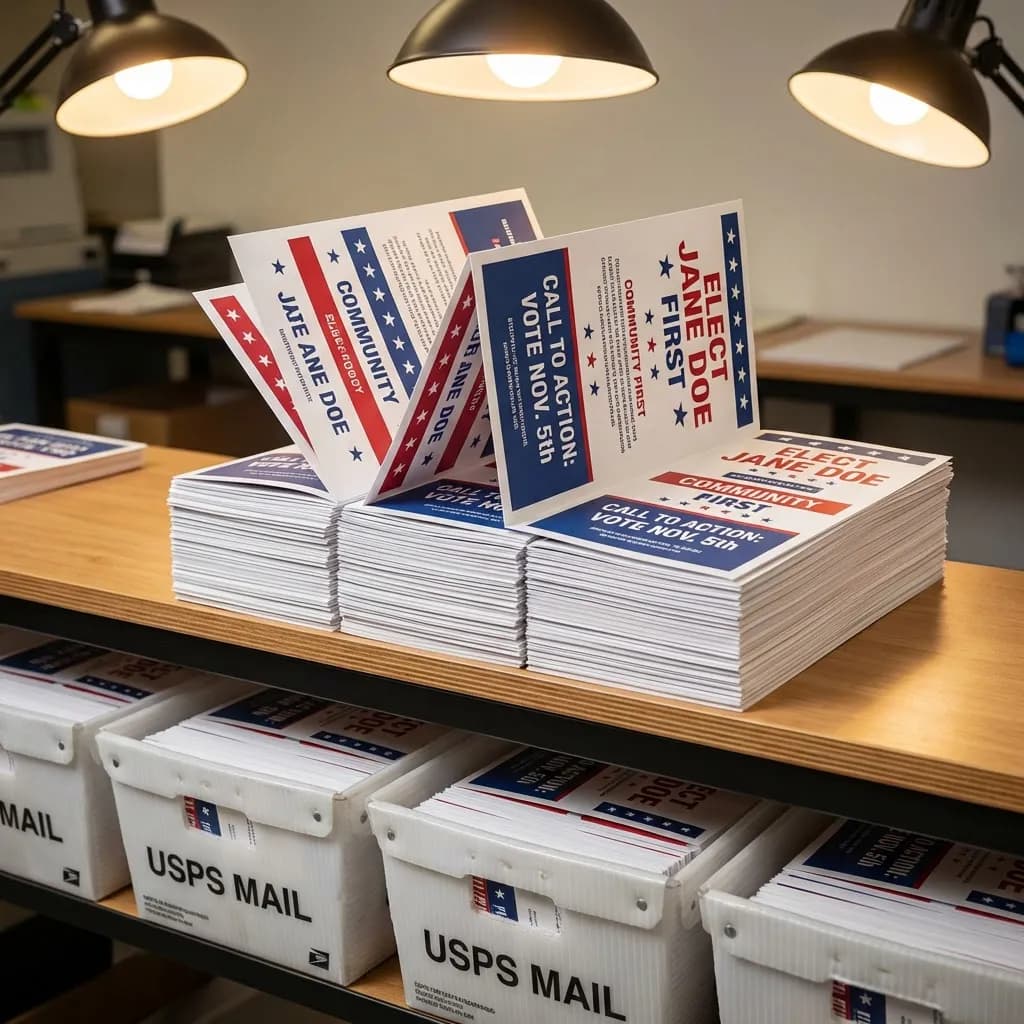
Campaign mailers sorted and ready for USPS bulk delivery 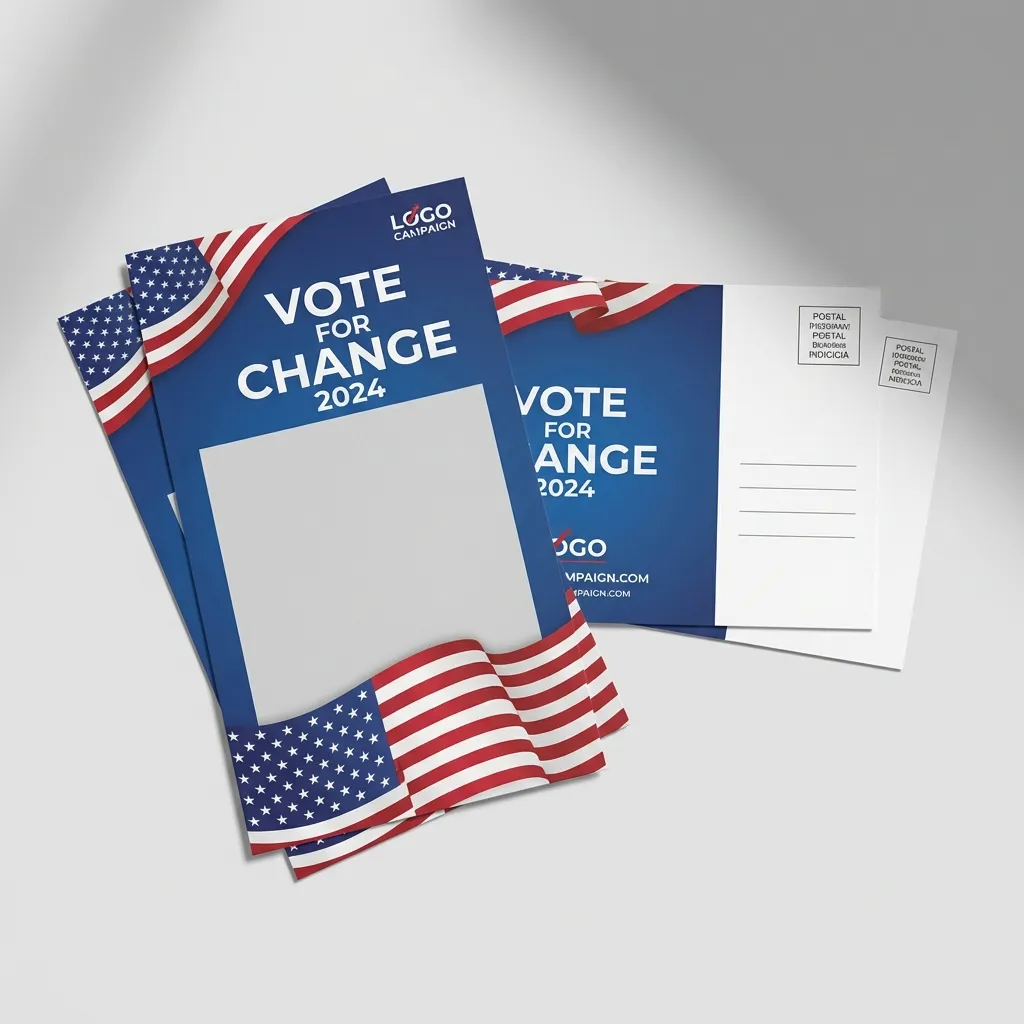
Oversized campaign postcards with full-color printing 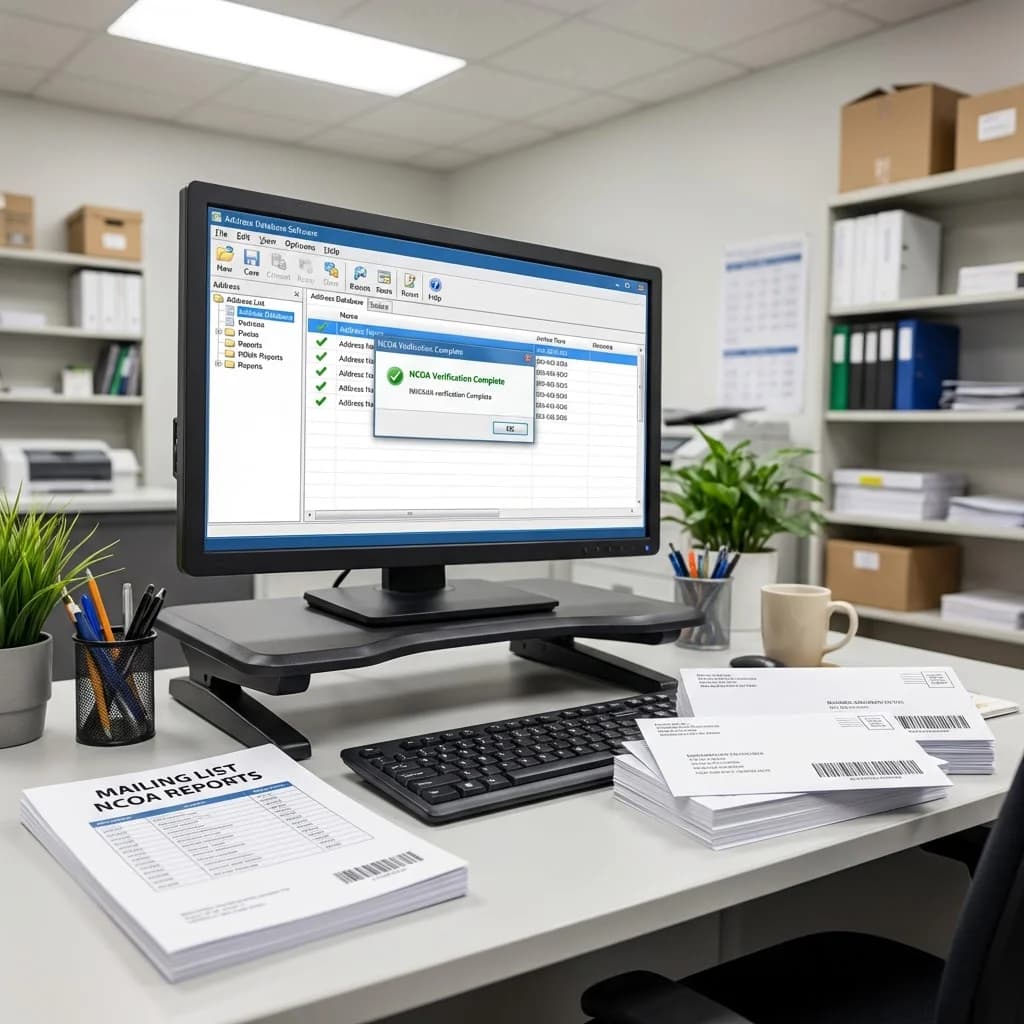
NCOA address verification and list processing 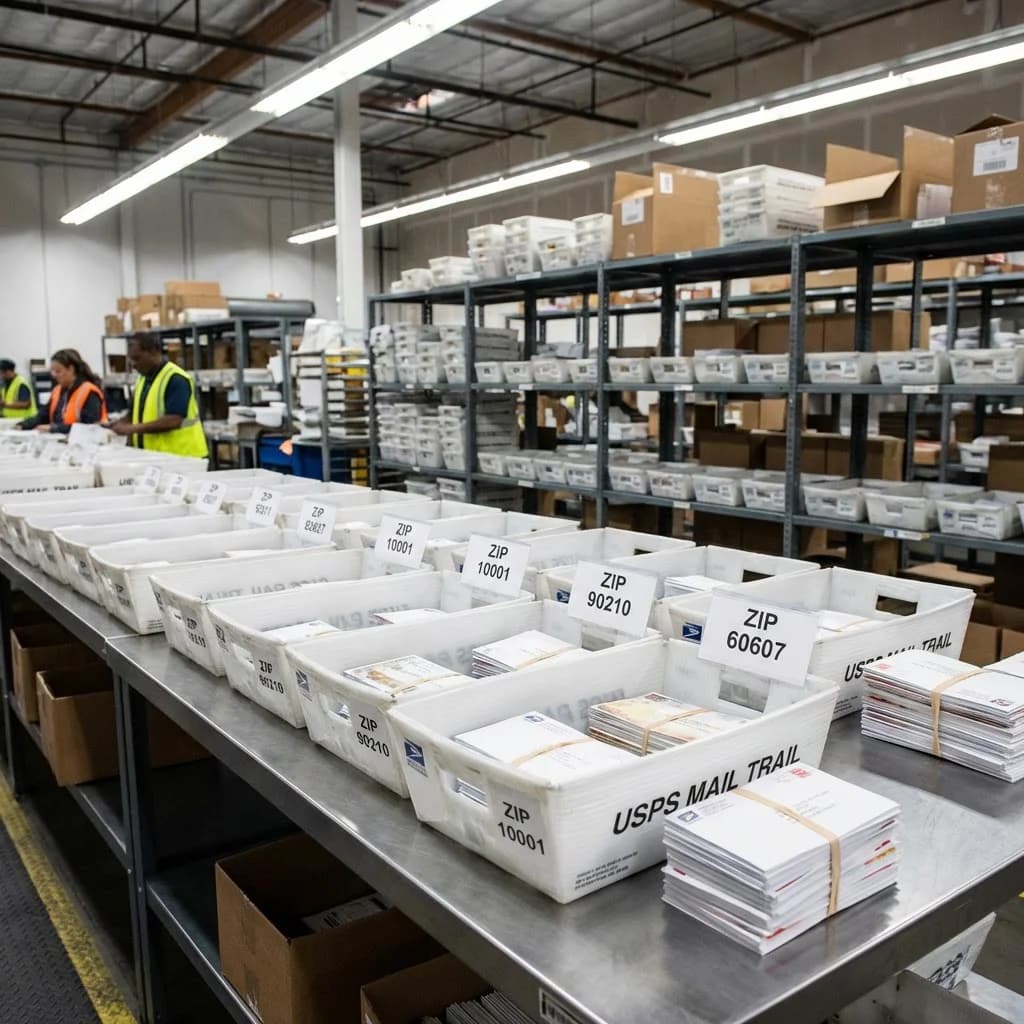
Presorted mail trays ready for USPS delivery 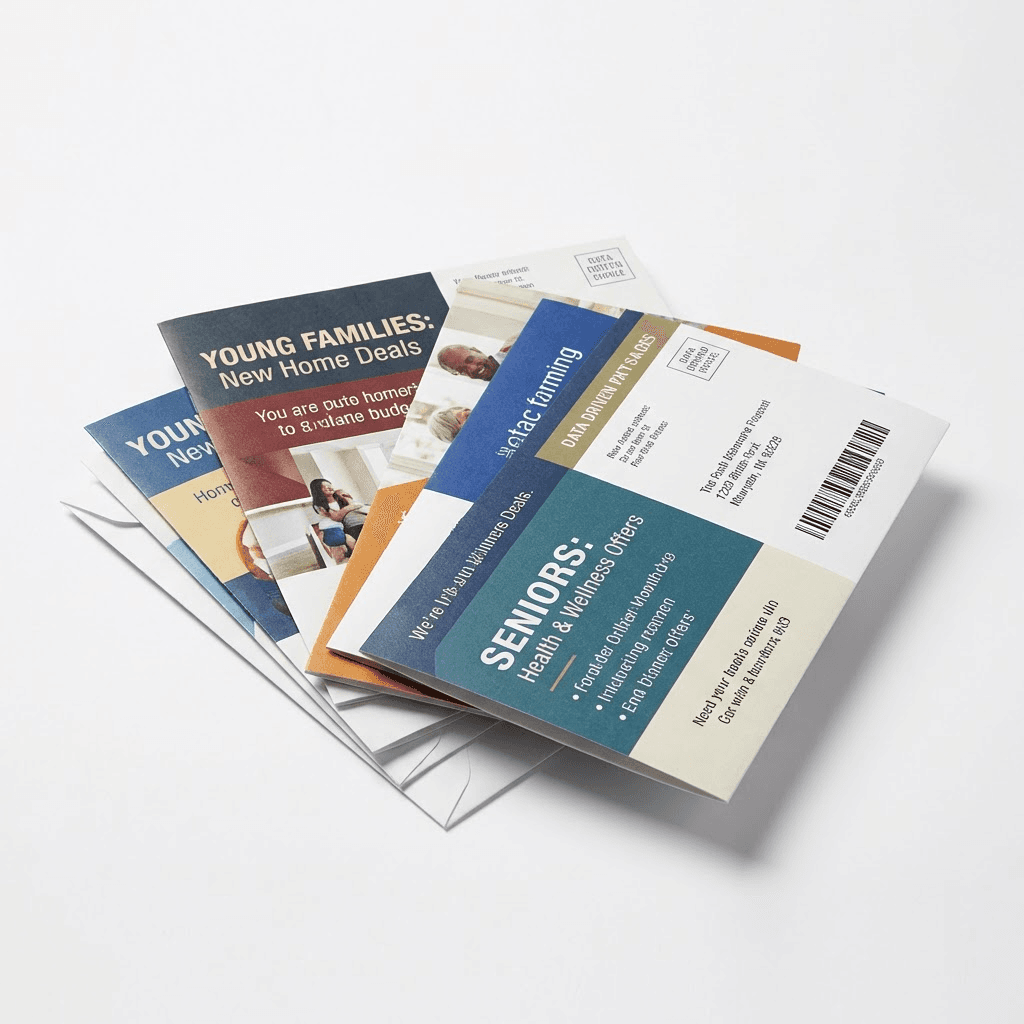
Demographic-targeted postcard variations 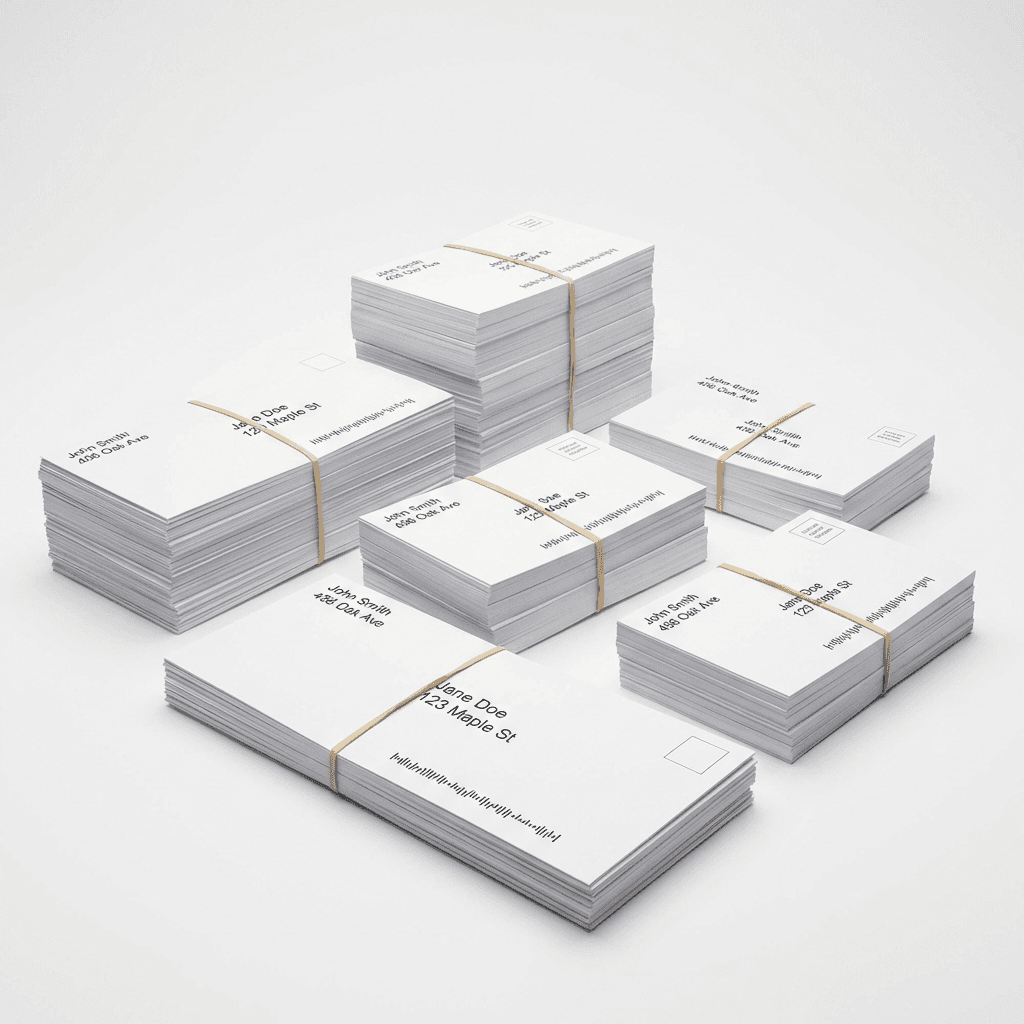
Sorted and bundled mail ready for delivery
Frequently Asked Questions — Political Mail Printing
Is political mail the same as EDDM?
No. EDDM (Every Door Direct Mail) saturates every address on a postal carrier route and is addressed to "Postal Customer" — there are no names on it and no list behind it. Political mail is targeted: it goes only to the specific voters you select from a voter file, addressed to them by name. The two are different products with different postage, different minimums, and different use cases. EDDM is the right tool when your universe really is everybody in a neighborhood — a small municipal race, a ballot question, a levy. Targeted political mail is the right tool the moment your universe is a subset: primary voters only, persuadable households only, low-propensity supporters only. Most campaigns above the ward level are mailing a subset, which means they need targeted mail, not EDDM.
What is drop shipping in direct mail, and how much does it save?
Drop shipping (USPS calls it destination entry) means the printer trucks your finished, presorted mail directly to a USPS facility near the voters instead of handing it to the local post office and letting USPS move it across the network. Because you have already done part of the transportation, USPS charges less postage. There are three common entry depths: DNDC at a regional hub, DSCF at the Sectional Center Facility serving a group of ZIP codes, and DDU at the delivery unit that actually carries the mail. The deeper you enter, the larger the postage discount and the tighter the in-home window. DSCF entry is the workhorse for political mail — it materially cuts postage on a five-figure drop and, more importantly for a campaign, it removes days of network transit variability so your piece lands when you planned it to.
Where does MCI drop ship political mail in the Midwest?
MCI drop ships from its St. Louis plant to USPS destination facilities serving the major Midwest metros — including St. Louis, Kansas City, Springfield, Columbia and Cape Girardeau in Missouri; Chicago, Springfield, Peoria, Champaign and Rockford in Illinois; plus Des Moines, Omaha, Wichita, Topeka, Indianapolis, Milwaukee, Madison, Minneapolis-St. Paul, Detroit, Grand Rapids, Columbus, Cleveland and Cincinnati. St. Louis sits near the geographic center of the region, so effectively every one of those metros is within a single driver day of the plant. Note that USPS is actively consolidating its processing network, so facility names and entry points change; MCI confirms the correct current entry point for your ZIP ranges at the time we build the mail plan rather than working from a stale list.
How much does targeted political mail cost per piece?
For a standard 4.25 x 6 in postcard at 5,000–25,000 pieces, all-in cost — printing, list processing, addressing, and presorted Marketing Mail postage — typically lands between $0.30 and $0.60 per piece. At 50,000+ pieces it drops to roughly $0.32–$0.42. Committees that qualify for Nonprofit Marketing Mail can land as low as $0.28 on the same artwork. Folded letter packages in an envelope run $0.55–$1.20. Variable data personalization adds about $0.01–$0.03 per piece. List costs run $0.03–$0.15 per record if you are buying or enhancing rather than using a party voter file. A workable planning number for a mid-size run is $0.40 per piece all-in. Drop shipping reduces the postage component of that figure.
What voter list formats does MCI accept?
CSV and Excel are the standard formats, and MCI accepts exports from the major sources campaigns actually use — state party voter files, VAN/VoteBuilder, i360, L2, Aristotle, TargetSmart, and state Secretary of State file downloads. Send the file with whatever fields you have; MCI runs CASS certification to standardize and validate addresses, NCOA to catch voters who have moved, and deduplication to collapse repeat households so you are not paying postage twice to the same address. Any field in your file — first name, precinct, polling place, ward, turnout score — can be merged onto the piece with variable data printing. You get a count back after processing so the quantity you approve is the deliverable quantity, not the raw file size.
How far in advance should a Midwest campaign book political mail?
Book the slot as early as you can and finalize art later. For a normal drop, plan on roughly three weeks from approved art to in-home: a few days for list processing and proofing, print and bindery, presort and tray, then truck time plus USPS delivery spread from the entry point. Drop shipping compresses and stabilizes the last part of that — you are buying predictability, not just postage. MCI can turn rush jobs in 1–2 business days when a late-cycle piece has to move, but rush capacity in the final three weeks before a general election is the scarcest thing in the industry, so a campaign that reserves press time in advance is in a much better position than one calling for a quote in late October.
Does political mail need a union bug and a disclaimer?
The disclaimer is a legal requirement; the union bug is a political one. Every piece needs a "paid for by" disclaimer identifying the committee, per state campaign finance law — Missouri committees register with the Missouri Ethics Commission, Illinois committees with the State Board of Elections, and each Midwest state has its own rules. The union bug is different: no law requires it, but labor endorsement bodies frequently do, and they verify it on submitted materials. MCI has been a union shop since 1984, so every piece we print carries the bug at no extra cost and with no separate vendor. MCI builds disclaimer placement into every proof; you supply the committee name from your registration.
Can MCI handle multi-state Midwest mail programs?
Yes — that is a large part of why the drop-ship capability exists. A coordinated program across several Midwest states, or a statewide race spanning many media markets, needs its mail to land in a coordinated window rather than trickling in over ten days. MCI produces the whole run in one place, splits it by destination facility at presort, and trucks each portion to its own entry point so the pieces arrive on a schedule you set. One vendor, one proof cycle, one invoice, and one point of contact — instead of coordinating a printer, a list vendor, a mail house, and a logistics broker across four states.
Send Us Your List and Your Drop Date
Union shop. WBE certified. 40+ years of Midwest political mail out of one St. Louis plant. Most quotes come back the same business day.